The refined real-time simulation system DIG-Wind developed by our group integrates fluid, mechanical and electrical modeling with heterogeneous acceleration on GPU, CPU and FPGA, forming an integrated platform covering modeling, simulation, monitoring and analysis. For fluids, GPU parallel computing characterizes single-turbine wakes and the superposition effects among multiple turbines; for mechanics, Kane's dynamic equations are solved efficiently on the CPU to analyze structural vibration and electromechanical coupling; for electrics, FPGA-accelerated electromagnetic transient solving meets microsecond-level real-time requirements. The system is supported by host-computer and monitoring software covering topology modeling, real-time control and panoramic monitoring, providing support for digital verification of wind farms.
This system is an integrated digital-intelligent platform combining real-time monitoring with digital twins. A 3D engine builds the full wind farm terrain, and fluid rendering visually presents three-dimensional wind-speed heat maps for panoramic, three-dimensional perception. Functionally, measured and simulated data are deeply fused for multi-dimensional comparison and impedance measurement, while the electrical single-line diagram enables global monitoring of wind farm parameters. The system establishes a complete closed loop from individual turbine pitch and yaw control to farm-level power dispatch, SVG and energy storage management. A security & stability analysis and alarm-management module deeply coordinates virtual simulation with physical O&M, providing a solid data-decision foundation for fault warning, grid-connection security and lean operation of wind farms.
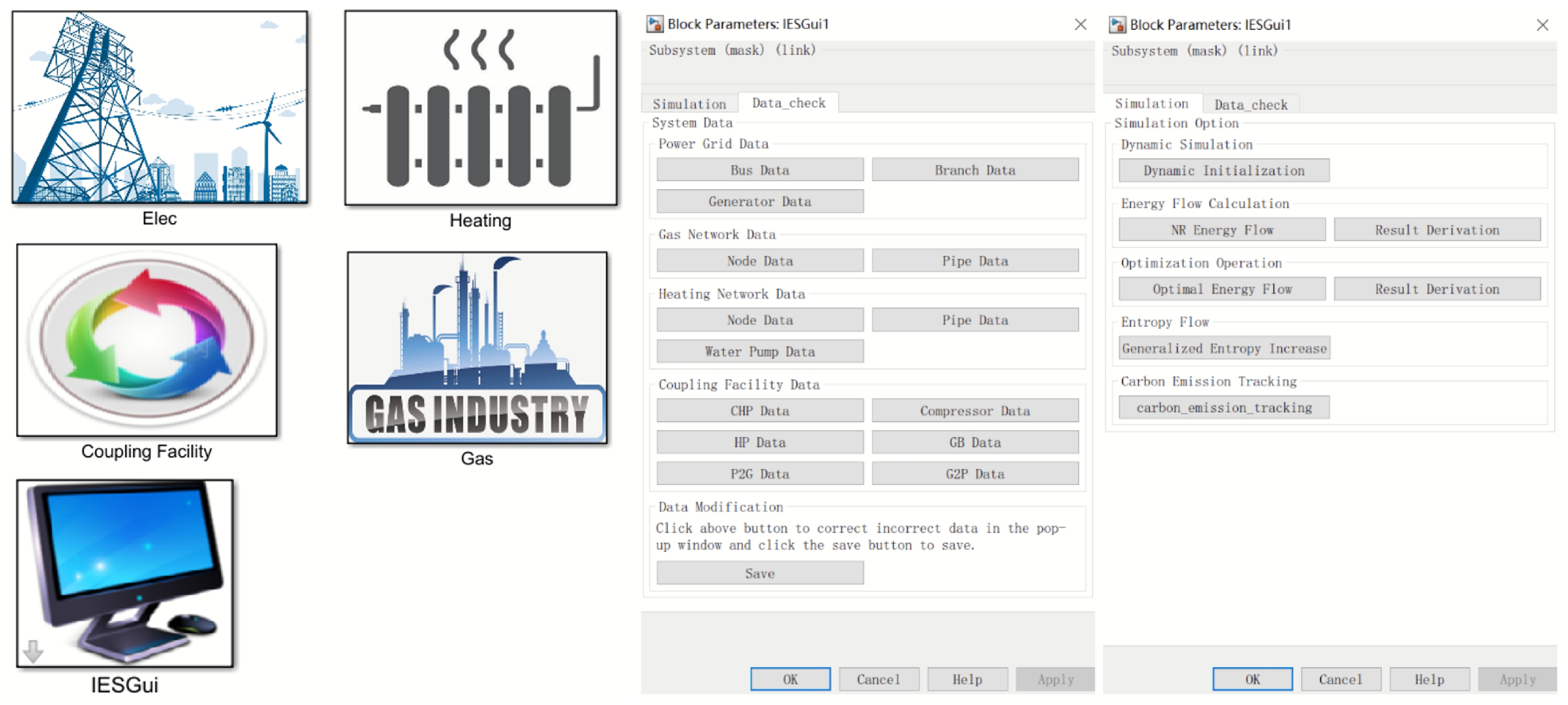
The Integrated Energy Digital Management & Control System developed by our group is an integrated platform for the coordinated operation of sources, grids, loads and storage in industrial parks. Its core functions include unified modeling of electricity, heat, cooling and gas, full-condition state sensing of equipment, lines and pipelines, dynamic carbon accounting with adaptively updated energy-carbon parameters, and cloud-edge collaborative optimal dispatch. It enables real-time monitoring, analysis and optimal control of energy flows, carbon flows and equipment operating states, shifting park energy management from passive response to active optimization and providing a replicable, scalable digital solution for the green and low-carbon transition of industrial parks.
Taking real-time wind speed, operating measurements, equipment aging indicators and updatable model parameters as inputs, the wind turbine digital twin platform builds a synchronous visualization interface for a reference turbine and its digital twin. The left side shows wind-speed input, aging detection, aging curves and operating measurements such as generator power, current and voltage; the center compares the 3D models of the reference and twin turbines and provides curve comparison of operating and twin data; the right side displays in real time the twin's operating status, model update time, synchronization rate and updatable parameters such as generator resistance, inductance, inertia coefficient and control parameters. The platform supports model-parameter calibration, operating-state monitoring, aging assessment, simulation comparison and intelligent O&M decision-making.
Aimed at control verification, grid-connection characteristic analysis and broadband stability research, the wind turbine hardware-in-the-loop test and simulation platform reproduces the typical operating characteristics of DFIG and direct-drive turbines in a laboratory environment, avoiding uncontrollable field wind speeds, black-box control systems, high equipment power ratings and high commissioning risks. The platform consists of a wind farm simulator, excitation converter, back-to-back motor, DFIG/direct-drive generator, commercial converter, rapid prototyping controller, Chroma grid simulator and sampling system. The wind farm simulator models wind speed and aerodynamic characteristics based on OpenFAST, the back-to-back motor emulates the mechanical input, and the converter realizes power conversion and grid-connection control. The platform provides aerodynamic-mechanical-electrical coupling reproduction, open control and broadband impedance measurement, supporting wind farm simulation, control-strategy verification, fault ride-through, impedance testing and grid-connection stability analysis.
Aimed at the grid-connection operation and stability analysis of renewable equipment such as wind power, PV, energy storage and SVG, the flexible multi-converter networking test platform focuses on control verification, impedance measurement and stability testing with multiple parallel converters. It consists of bidirectional programmable DC sources, commercial converters, filters and line modules, a grid-connection transformer, a grid simulator, sampling units, interface modules, a frequency response analyzer and interfaces to real-time controllers such as RTDS and RT-Lab, and can emulate different DC energy inputs, AC topologies, line impedances and grid strengths. With flexible networking, open control and broadband impedance measurement capabilities, it supports single-converter grid connection, multi-converter parallel operation, weak-grid access, hardware-controller-in-the-loop testing and stability analysis, supporting research on the parallel-operation mechanisms of multiple devices in renewable power plants, broadband oscillation suppression and stable control strategies.
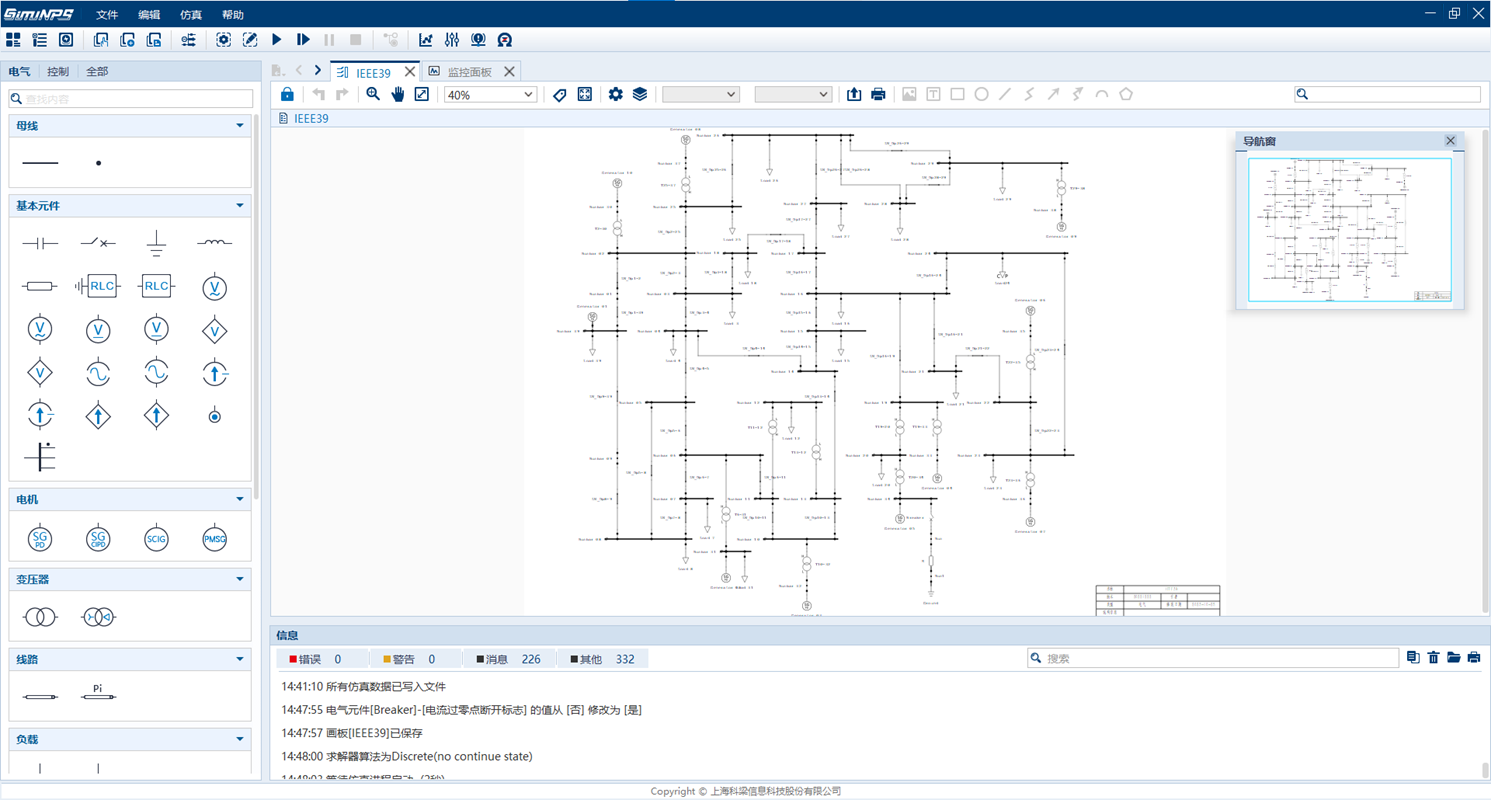
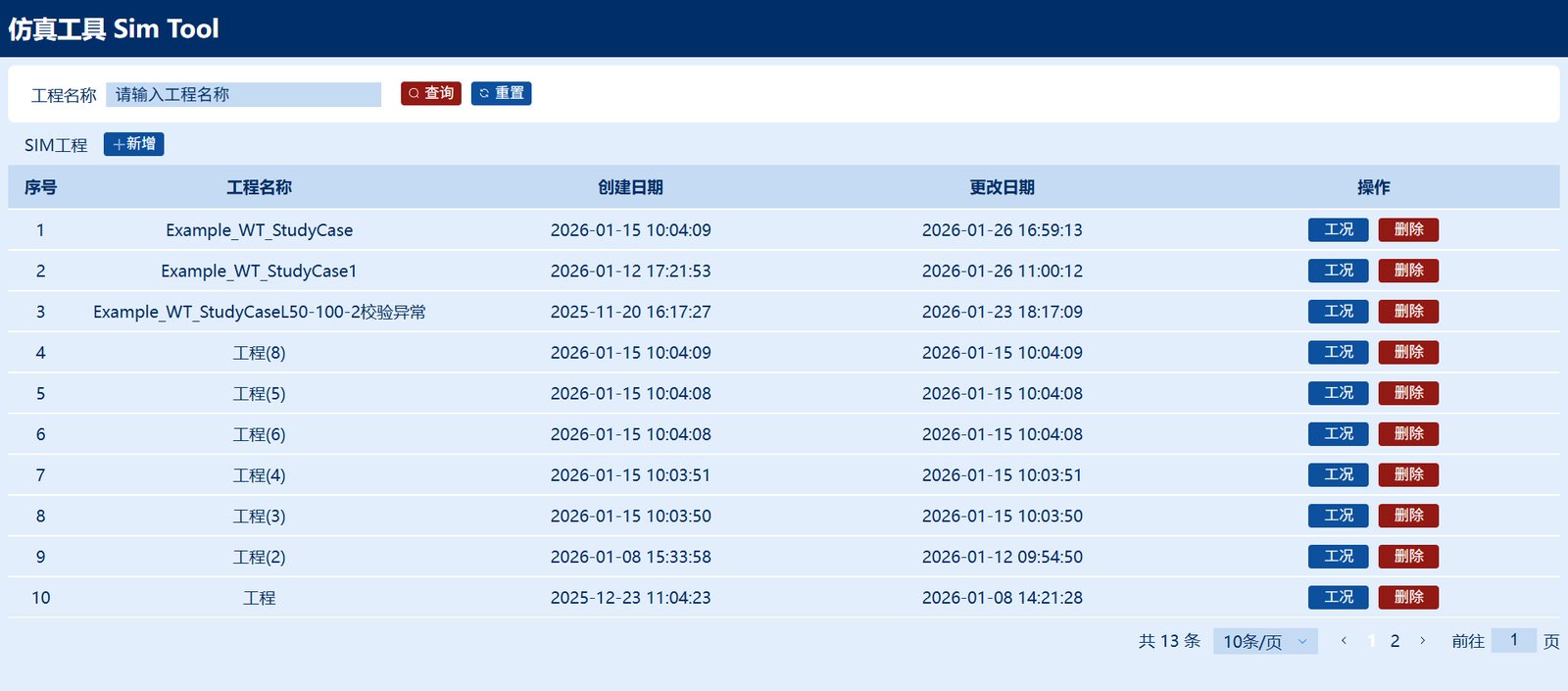
SimuNPS is a fully self-controllable, integrated modeling and simulation software for new-type power systems, built for electromagnetic transient simulation, power flow calculation and data analysis of source-grid-load-storage-charging systems. It integrates time-domain, frequency-domain, information-domain and multi-energy-domain modeling, supports domestic operating systems such as Kylin, and offers rich electrical-component and control-system libraries covering typical equipment such as synchronous generators, transformers, lines, converters, wind turbines, PV and energy storage. With a graphical modeling canvas and advanced numerical solvers, it supports microsecond-level simulation steps, result visualization, model data management and C++ secondary development, providing a self-reliant platform for modeling, simulation and verification of new-type power systems.
Aimed at integrated energy system modeling and simulation, this toolbox is built on the Python technology stack as an open, modular and extensible framework that, with reference to PowerFactory and Simulink, achieves unified modeling, simulation and result management for electricity, gas, heat, cooling, storage and multi-energy coupling equipment. The current version provides component library, case management, steady-state calculation, optimization, data management, result visualization and GUI modeling modules. It supports multiple energy-flow calculation paths such as the holomorphic embedding method, FDM and nonlinear solvers, and extends to optimal energy flow and dispatch optimization. Emphasizing Python-native implementation and long-term maintainability, it reserves interfaces for dynamic simulation, control, evaluation metrics and third-party simulation, supporting algorithm reproduction, teaching and research, and engineering applications.
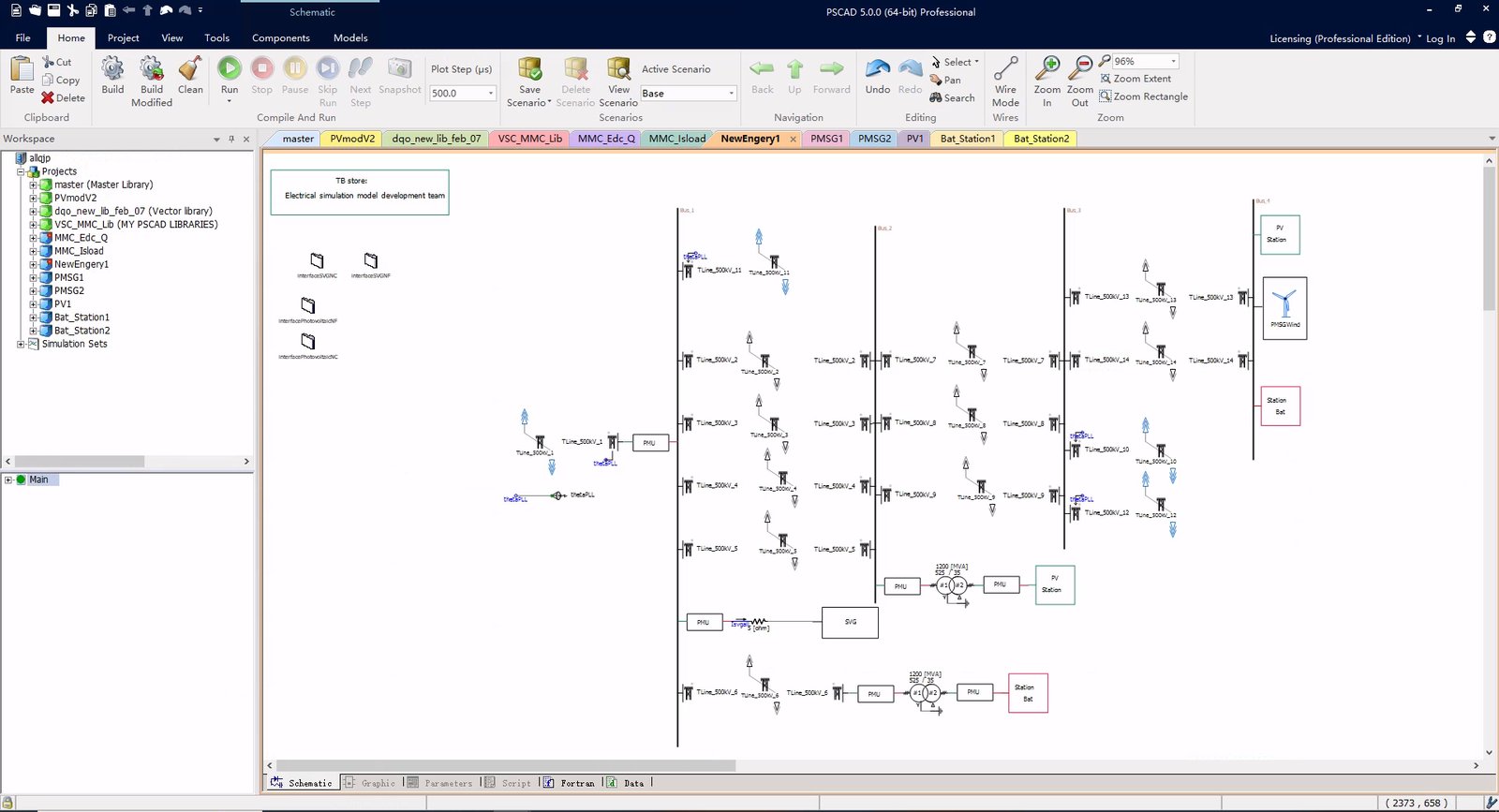
This tool addresses the need for accelerated simulation of renewable-energy equipment models in PSCAD, such as wind turbines, PV, energy storage, SVG and VSC-HVDC, and can be embedded into existing PSCAD projects as a high-performance component. Based on fine-grained decoupling and a semi-implicit delayed interface algorithm, it divides a detailed model into electrical sub-networks that can be solved in parallel and deploys them to the GPU. The PSCAD side retains the main grid, interface nodes and external control system, calling the DLL through a custom module to exchange voltage, current and control variables synchronously. The tool supports initialization, interface updating, sub-network computation and result feedback, improving the efficiency of electromagnetic transient simulation for large-scale renewable power plants while preserving the accuracy of key electrical quantities.
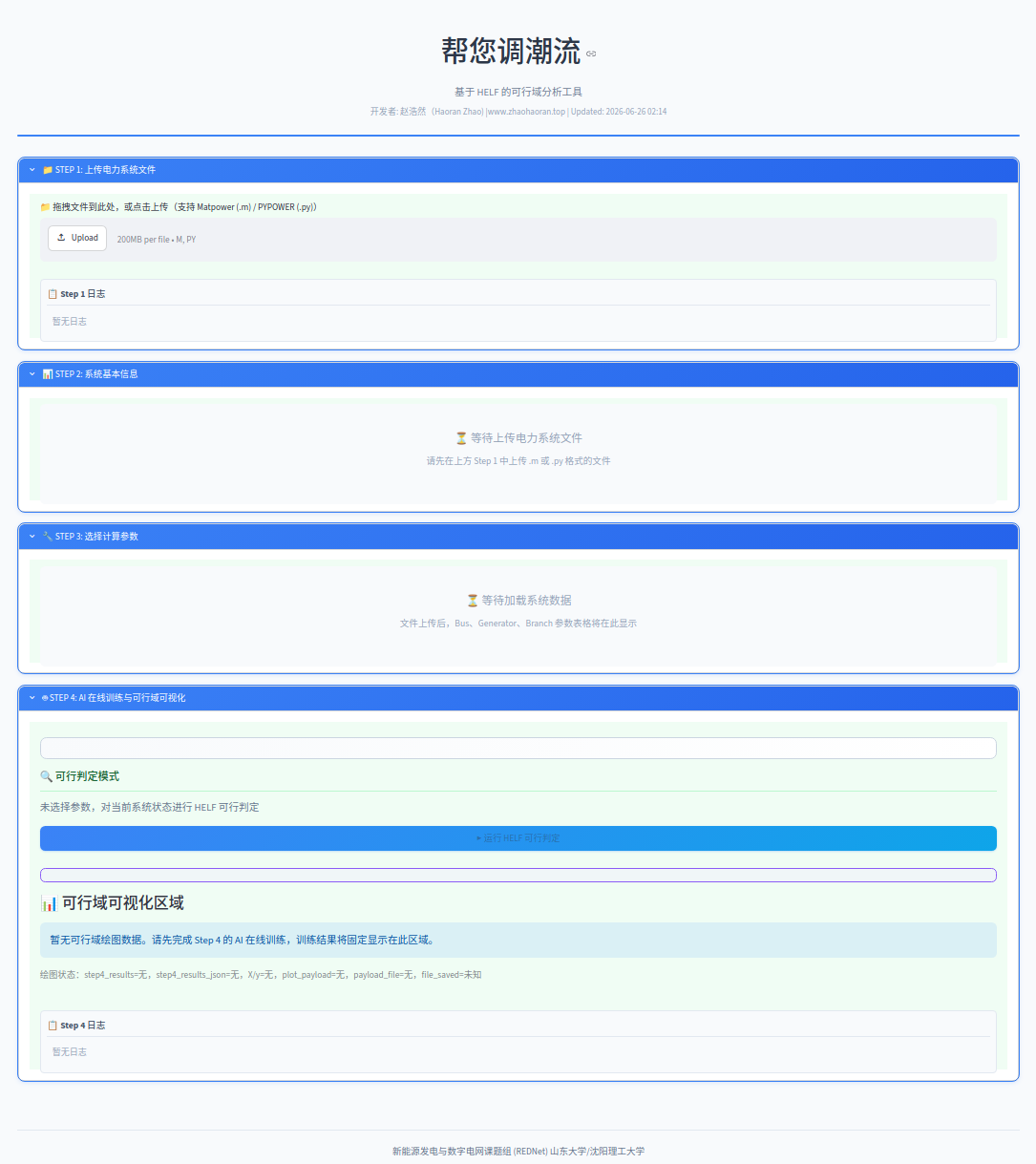
Based on holomorphic embedding, this tool performs feasible-region analysis of 1-3 dimensional multi-variable parameters. Its iterative strategy adopts a two-stage mode of multi-round sampling and boundary refinement, automatically adapting to CPU and GPU computing power for parallel computation. Results are marked in three colors: green for the feasible region, yellow for the infeasible region and red for the critical boundary. With a modular design, clear logic and ease of use, it avoids matrix singularity and iterative divergence and remains stable in convergence under complex scenarios; combined with a directional boundary search strategy that cuts redundant computation, it accurately characterizes feasible-region boundaries, providing a clear basis for parameter tuning in power flow optimization.
This program performs automatic model conversion between BPA and DIgSILENT PowerFactory. BPA is a mature software widely used in power system planning and operation in China, with a complete data system and reliable results; PowerFactory provides multi-type simulation and analysis capabilities. By parsing BPA data cards, the program automatically matches and generates device models and components in PowerFactory for efficient model conversion. Converted models can be used directly for various calculations in PowerFactory, effectively combining BPA's data advantages with PowerFactory's analysis functions and significantly improving modeling efficiency as a practical tool for engineering research.
This program establishes a model conversion interface between PSASP and DIgSILENT PowerFactory. It automatically converts large-scale grid models in PSASP directly to the PowerFactory platform, so that various calculations and analyses can be performed on the model in PowerFactory. Combining PSASP's high-quality database resources with PowerFactory's excellent simulation platform, the program provides researchers with a convenient model converter tool.
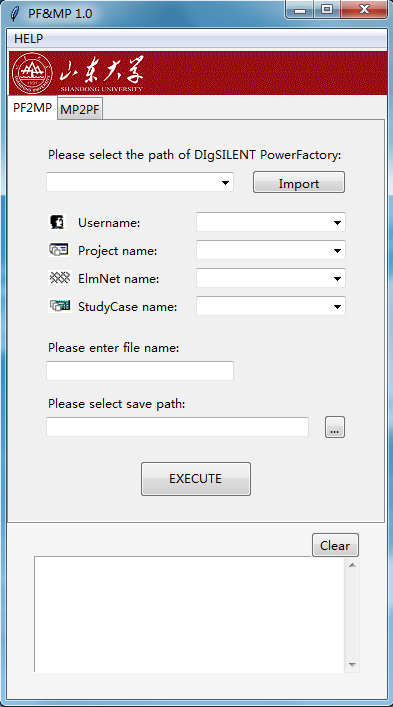
This program establishes a model conversion interface between DIgSILENT PowerFactory and MATPOWER. It can automatically read grid model data from DIgSILENT PowerFactory externally and export it as ".m" files that can be used directly by MATPOWER. By combining DIgSILENT PowerFactory and MATPOWER, the program improves the efficiency of related research.
This tool serves power system planning and operation analysts. Driven by Python and relying on the PowerFactory COM interface, it achieves refined external control of grid models and full-process automation from parameter configuration and simulation to data parsing and report generation. It supports batch import of parameters into elements such as lines, buses and generators and automatic construction of simulation cases; it calls the PowerFactory power flow and transient stability engines to complete simulations and exports structured electrical data such as bus voltages, branch flows and generator rotor angles. Combined with Python data processing, it enables multi-case result comparison, curve plotting and automatic report generation. It applies to compliance verification of renewable models, stability testing, batch scanning of standard test cases under European/Chinese standards and control-parameter optimization, replacing large amounts of repetitive manual work and advancing power system simulation toward automation and intelligence.
Taking real wind farms and wind turbines as prototypes and integrating 3D virtual simulation, operation monitoring, fault diagnosis and training assessment, this integrated virtual simulation platform builds a digital wind power talent-training platform covering teaching, training, competition and evaluation. It supports panoramic roaming of onshore and offshore wind farms, learning the structure and working principles of key turbine components, and simulation training in equipment disassembly/assembly, operation monitoring, multi-condition regulation and grid-connection operations. A typical fault library enables fault injection, fault diagnosis, troubleshooting, safety-norm training and multi-person collaborative training, and supports theoretical exams, practical simulation assessment, whole-process recording, intelligent scoring and weak-point analysis. By faithfully reproducing real wind power O&M scenarios and standard operating procedures, it provides a safe, efficient, repeatable and evaluable integrated training environment for university teaching, skills training and vocational skills competitions.
Centering on electricity spot price forecasting, supply-demand state analysis and visualization of operating information, the electricity trading forecasting system integrates multi-source data including electricity prices, loads, generation output, renewable output, meteorology and day types to build a forecasting analysis and decision-support platform for electricity trading scenarios. It provides both a forecasting platform and a data display module, enabling visual analysis of forecasting model structure, training process, algorithm performance and historical data, as well as data queries at different time scales and evaluation of forecasting results, offering intuitive data support and a decision-making basis for operating-state monitoring and forecasting model optimization.
Platform Overview:Addressing core pain points in renewable grid connection, microgrids and new-type power systems - such as difficult coordinated control of multiple devices, insufficient scenario adaptability and unverified grid-connection stability - our group has developed a flexible multi-converter networking test platform applicable to wind farms, PV, energy storage, SVG and other scenarios;
the programmable DC source emulates a direct-drive turbine and its machine-side converter, and the multi-converter and AC line modules can be used for grid-connection testing of AC collection systems in wind farms; together with programmable PV and energy storage sources, they can be used to test the corresponding multi-machine systems.
The platform can accurately emulate grid disturbances such as voltage sags, frequency fluctuations and power impacts, as well as renewable output fluctuations caused by extreme weather (e.g. gusts and shading), verifying the transient response and fault ride-through capability of converter networking systems and providing a real test environment for control-algorithm optimization.